Huanghuali

> Hardwoods > Fabaceae > Dalbergia > odorifera
DATA SOURCE(S): 36,69,70
Huanghuali (Dalbergia odorifera)
  • NATIVE
  • INTRODUCED

Average Dried Weight:AVERAGE DRIED WEIGHT
Density is the measurement of a wood’s weight per unit volume. Here, "dried weight" specifically refers to wood at 12% moisture content, and values are given in pounds per cubic foot and kilograms per cubic meter. Also keep in mind that density commonly varies by +/- 10% from the average.

Click on the link "Average Dried Weight" for more details.
54.6 lbs/ft3 (875 kg/m3) Medium-High WEIGHT TIERS
Extremely Low:     0+ kg/m3
Very Low:   420+ kg/m3
Low:   520+ kg/m3
Medium-Low:   620+ kg/m3
Medium:   730+ kg/m3
Medium-High:   840+ kg/m3
High:   960+ kg/m3
Very High: 1,080+ kg/m3
Extremely High: 1,200+ kg/m3
Tiers are based on CSIRO provisional strength groupings (SD1-SD8) based on density.

Janka Hardness:JANKA HARDNESS
This test measures a wood’s resistance to indentation, and is the pounds of force (or Newtons) required to embed a .444" (11.28 mm) diameter steel ball halfway into the wood. Values are for side grain, measured at 12% MC.

Click on the link "Janka Hardness" for more details.
2,890 lbf (12,860 N)* High JANKA HARDNESS TIERS
Extremely Low:      0+ N
Very Low:  2,050+ N
Low:  3,150+ N
Medium-Low:  4,480+ N
Medium:  6,280+ N
Medium-High:  8,380+ N
High: 11,080+ N
Very High: 14,000+ N
Extremely High: 17,450+ N
Tiers are derived from CSIRO provisional strength classifications (SD1-SD8) in conjunction with the USDA's estimated hardness based on density.

*Estimated hardness based on specific gravity.

Modulus of Rupture:MODULUS OF RUPTURE
Sometimes called bending strength, this test measures a wood’s strength before breaking (i.e., rupturing). Values are given in pounds of force per square inch and megapascals, measured at 12% MC.

Click on the link "Modulus of Rupture" for more details.
14,730 lbf/in2 (101.6 MPa) Medium-High MOR TIERS
Extremely Low:   0+ MPa
Very Low:  45+ MPa
Low:  55+ MPa
Medium-Low:  65+ MPa
Medium:  78+ MPa
Medium-High:  94+ MPa
High: 110+ MPa
Very High: 130+ MPa
Extremely High: 150+ MPa
Tiers are based on CSIRO strength classifications (SD1-SD8).

Elastic Modulus:MODULUS OF ELASTICITY
This test measures the wood’s level of deformation when under a given load. Higher values indicate less deformation (i.e., stiffer). Values are given in pounds of force per square inch and gigapascals, measured at 12% MC.

Click on the link "Elastic Modulus" for more details.
1,539,900 lbf/in2 (10.62 GPa) Medium-Low MOE TIERS
Extremely Low:    0+ GPa
Very Low:  7.9+ GPa
Low:  9.1+ GPa
Medium-Low: 10.5+ GPa
Medium: 12.5+ GPa
Medium-High: 14.0+ GPa
High: 16.0+ GPa
Very High: 18.5+ GPa
Extremely High: 21.5+ GPa
Tiers are based on CSIRO strength classifications (SD1-SD8).

Crushing Strength:CRUSHING STRENGTH
Also called compression strength, this test measures the maximum stress sustained before failure. Force is applied parallel to the grain (producing stress akin to chair legs). Values are given in pounds of force per square inch and megapascals, measured at 12% MC.

Click on the link "Crushing Strength" for more details.
8,730 lbf/in2 (60.2 MPa) Medium-High CRUSHING STRENGTH TIERS
Extremely Low:  0+ MPa
Very Low: 30+ MPa
Low: 36+ MPa
Medium-Low: 41+ MPa
Medium: 47+ MPa
Medium-High: 54+ MPa
High: 61+ MPa
Very High: 70+ MPa
Extremely High: 80+ MPa
Tiers are based on CSIRO strength classifications (SD1-SD8).

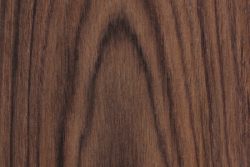
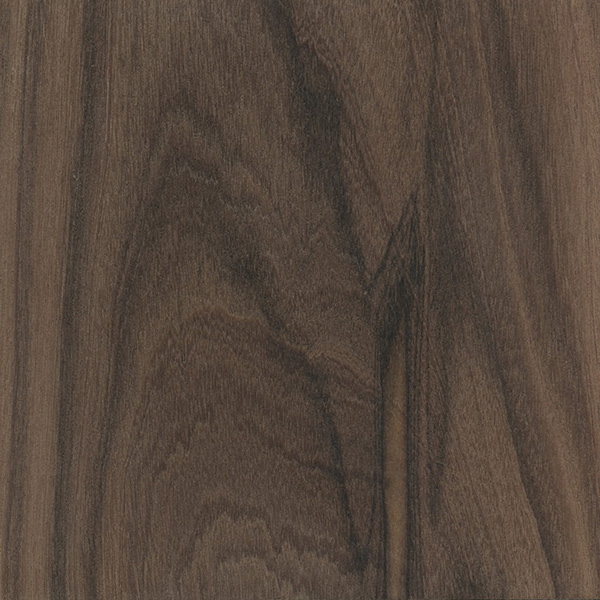
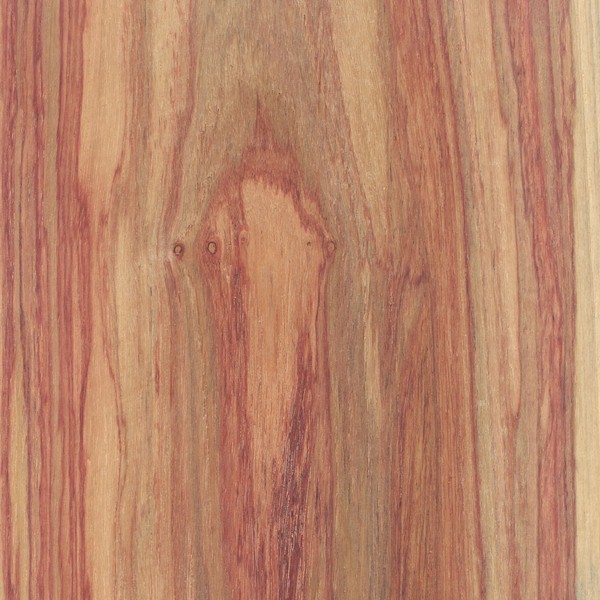
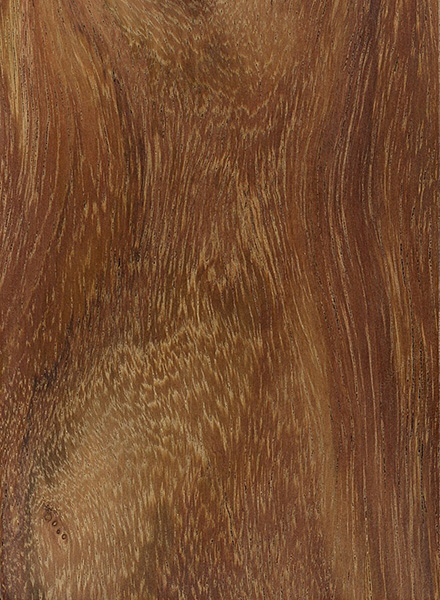
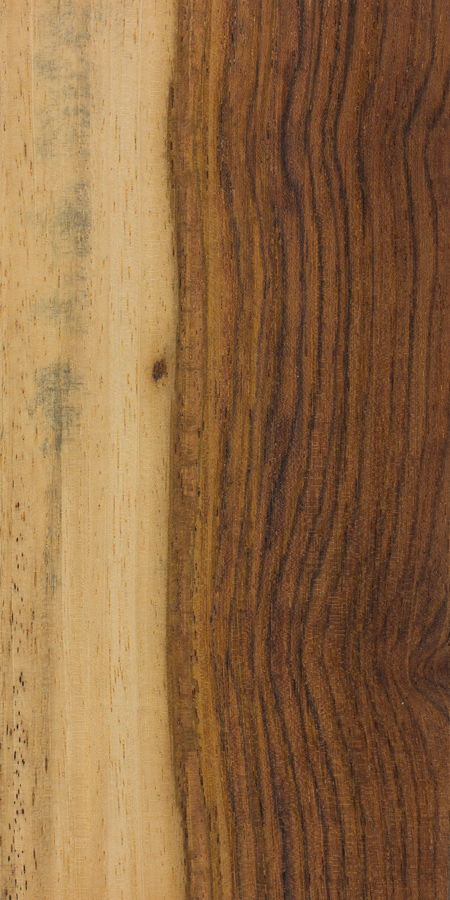
Color/Appearance: Has a uniform yellow to pinkish-brown color, with sapwood indistinct from heartwood.

Grain/Texture: Fine texture and a straight or slightly interlocked grain.

Rot Resistance: Non-durable; poor resistance to decay or insect attack. Good acid resistance.

Rated as very durable, with good insect resistance.

Rated as moderately durable to non-durable; poor resistance to decay and insect attack.

Workability: Easy to work with both hand and machine tools. Turns, glues, and finishes well.

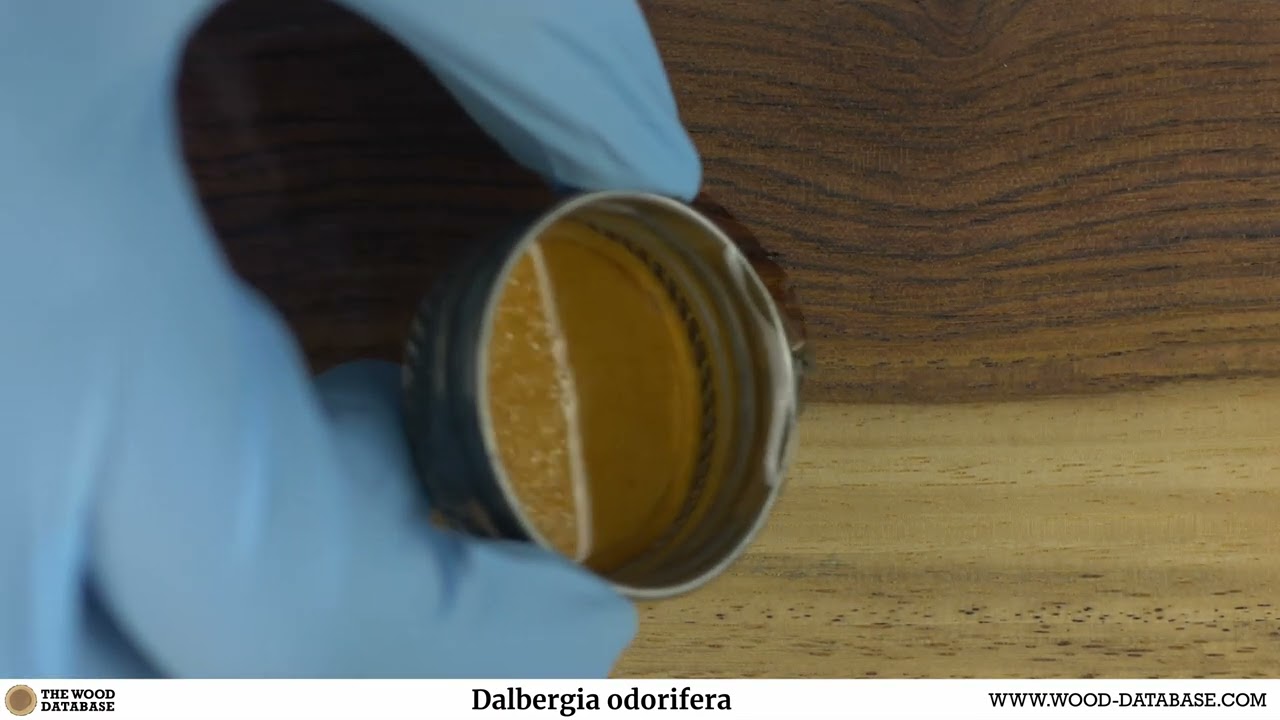
Odor: No characteristic odor.

Has an unpleasant odor when freshly cut.

Has a distinct odor while being worked.

Allergies/Toxicity: Besides the standard health risks associated with any type of wood dust, no further health reactions have been associated with eastern redbud—possibly due to its relative obscurity.

There have been no health effects associated specifically with coracao de negro, though this may be due to its relative obscurity. However, other Swartzia species have been reported to cause skin and respiratory irritation in some individuals.

Although severe reactions are quite uncommon, Cypress has been reported as a sensitizer. Although severe reactions are quite uncommon, sucupira has been reported to cause skin irritation.

See the articles Wood Allergies and Toxicity and Wood Dust Safety for more information.

Pricing/Availability: Seldom available in North America. Prices should be moderate when compared to other imported lumber.

Sustainability: This wood species is not listed in the CITES Appendices, and is reported by the IUCN as being a species of least concern.

This wood species is not listed in the CITES Appendices or on the IUCN Red List of Threatened Species.

This wood species is not listed in the CITES Appendices, but is on the IUCN Red List. It is listed as vulnerable due to a population reduction of over 20% in the past three generations, caused by a decline in its natural range, and exploitation.

This wood species is in CITES Appendix II, and is on the IUCN Red List. It is listed as endangered due to a population reduction of over 50% in the past three generations, caused by a decline in its natural range, and exploitation.
Common Uses: A general-purpose lumber used for furniture, interior millwork, plywood, and flooring.

Comments: None.

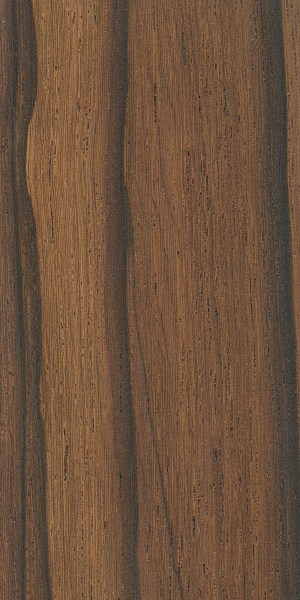
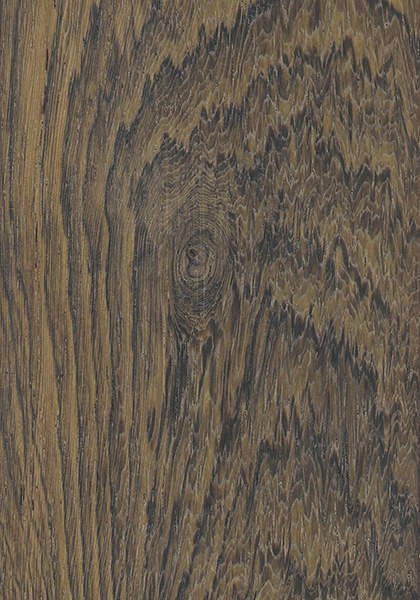
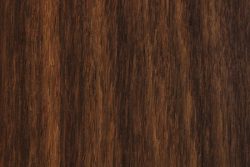
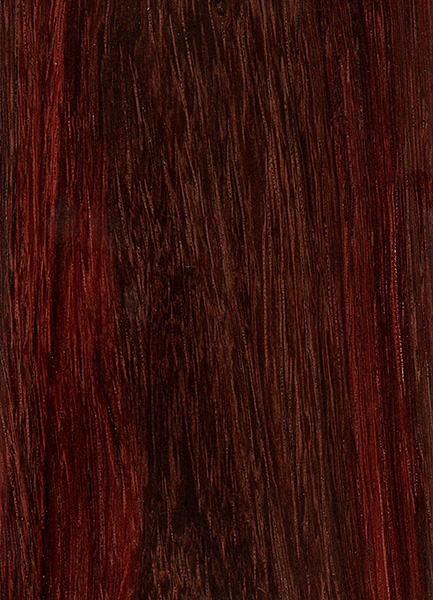
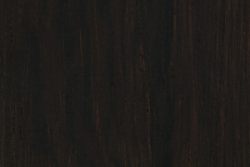
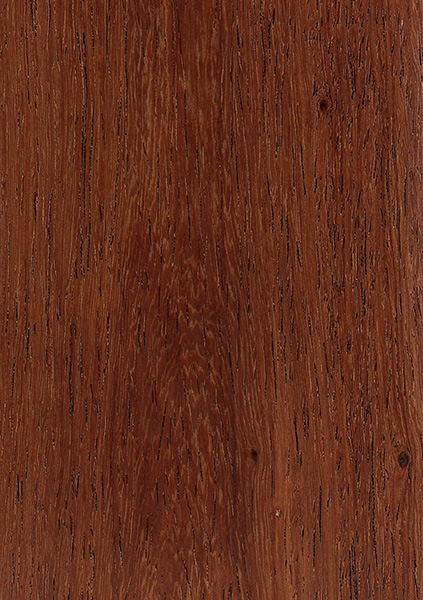
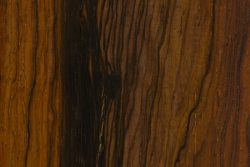
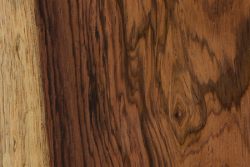
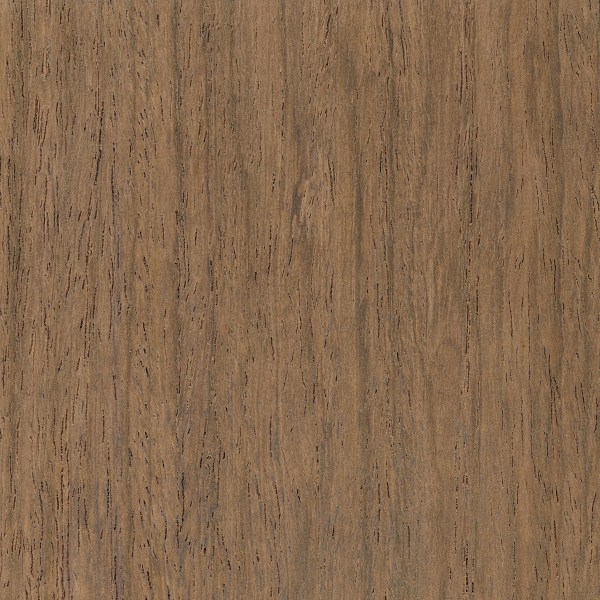
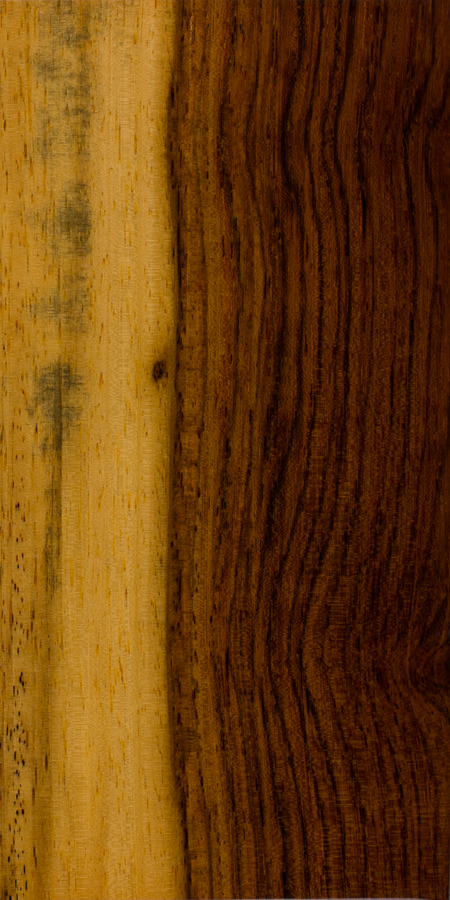
Images: Drag the slider up/down to toggle between raw and finished wood.

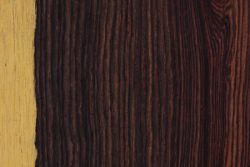
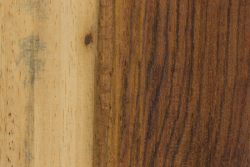
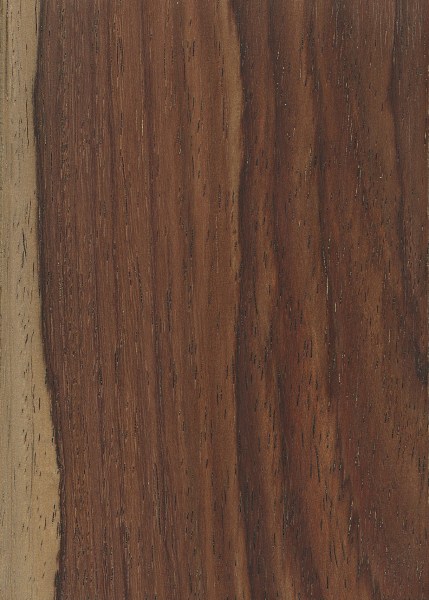
The sample below was collected several decades ago and the backside contains a label indicating it came from the Guangdong Academy of Forestry. The sample is slightly under the standard 6″ x 3″ size used on this website, so the image may appear slightly “stretched” with the grain and features looking slightly larger than 1:1.

Huanghuali with sapwood

Do you have images of projects made from this wood species? You can submit them to me here.

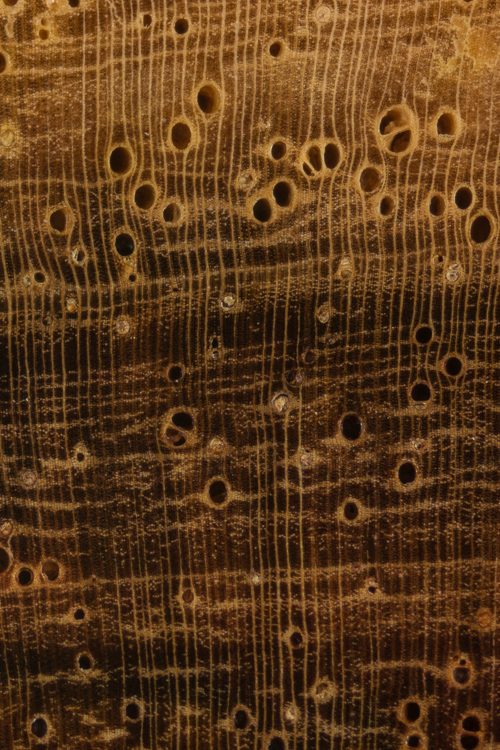
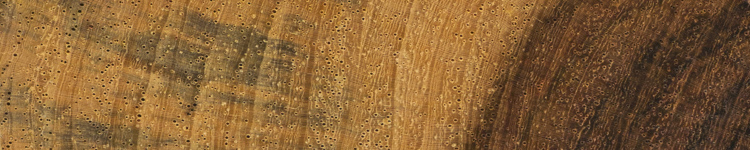
Identification: See the article on Hardwood Anatomy for definitions of end grain features.

Huanghuali (end grain 10x)
Huanghuali (end grain 1x)

Related Content:

Subscribe
Notify of
guest
0 Comments
Inline Feedbacks
View all comments