
|
Common Name(s): Southern Silky Oak Scientific Name: Grevillea robusta Distribution: Eastern coastal Australia, also grown on plantations in South Africa Tree Size: 65-100 ft (20-30 m) tall, 2-3 ft (.6-1.0 m) trunk diameter Average Dried Weight: 37 lbs/ft3 (590 kg/m3) Specific Gravity (Basic, 12% MC): .49, .59 Janka Hardness: 880 lbf (3,930 N) Modulus of Rupture: 10,790 lbf/in2 (74.4 MPa) Elastic Modulus: 1,151,000 lbf/in2 (7.93 GPa) Crushing Strength: 5,080 lbf/in2 (35.0 MPa) Shrinkage: Radial: 2.7%, Tangential: 7.7%, Volumetric: 10.5%, T/R Ratio: 2.9 |

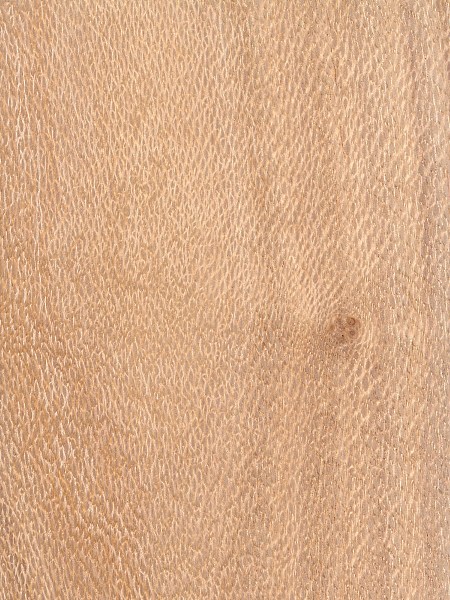
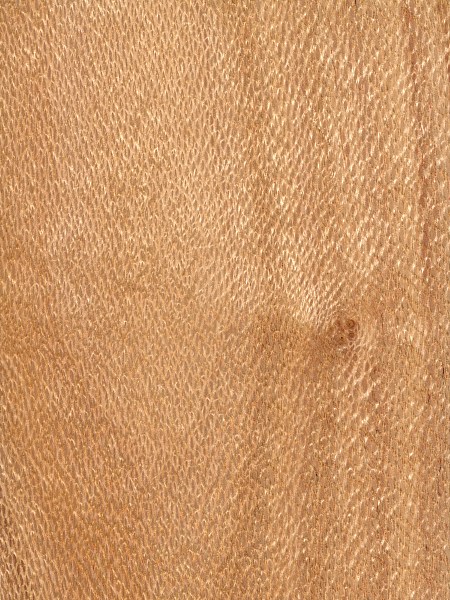
Color/Appearance: Heartwood is a light to medium reddish brown with grey to light brown rays. Like other woods that exhibit the strongest figure in quartersawn pieces, (such as Sycamore), Silky Oak has the most pronounced figure and displays the largest flecks when perfectly quartersawn; this is due to the wood’s large rays, whose layout can be seen the clearest when looking at the endgrain.
Grain/Texture: Has a fairly coarse texture and straight grain.
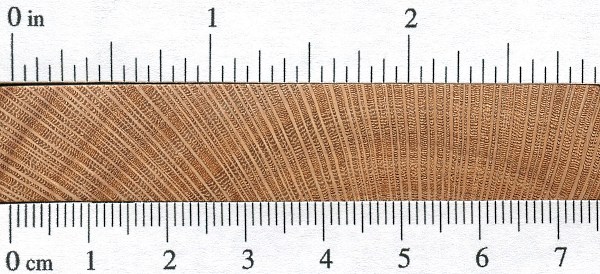
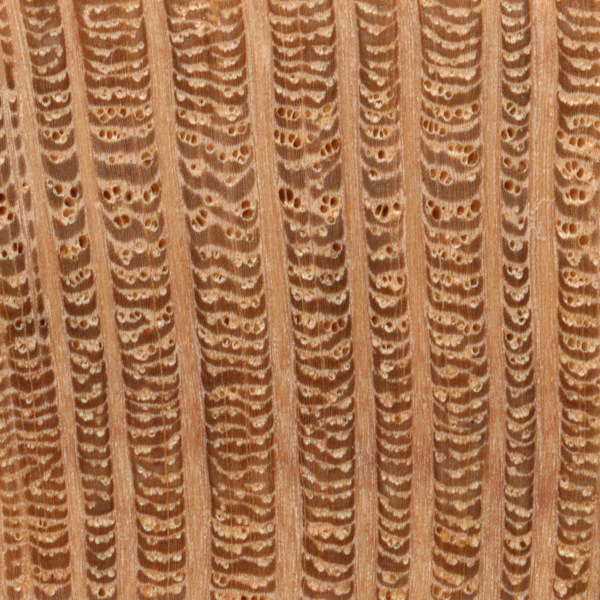
Endgrain: Diffuse-porous; medium to very large pores in tangential rows, few; solitary and tangential multiples of 2-3; deposits in heartwood occasionally present; very wide rays easily visible without lens, wide spacing; parenchyma unilateral, confluent, and banded (scalariform).
Rot Resistance: Southern Silky Oak is rated as moderately durable to durable in regards to decay resistance, and it is also moderately resistant to most insect attacks.
Workability: Overall a fairly easy wood to work with, though there may be some difficulty in planing, with tearout occurring. Southern Silky Oak also has a moderate blunting effect on cutting edges. Glues and finishes well.
Odor: No characteristic odor.
Allergies/Toxicity: Although severe reactions are quite uncommon, Southern Silky Oak has been reported to cause eye and skin irritation. See the articles Wood Allergies and Toxicity and Wood Dust Safety for more information.
Pricing/Availability: Southern Silky Oak is not too commonly available in the United States, and prices tend to be in the mid to high range for an imported hardwood.
Sustainability: This wood species is not listed in the CITES Appendices or on the IUCN Red List of Threatened Species.
Common Uses: Veneer, cabinetry, fine furniture, musical instruments, turned objects, and other small specialty items.
Comments: Southern Silky Oak is in the Proteaceae family, and has wide rays that are characteristic of Lacewood. In its vaguest sense, the term “lacewood” is used to describe any wood that displays figuring that resembles lace, (which would technically include Southern Silky Oak). Attempts to identify a specific board macroscopically may be difficult.
Proteaceae family:
Scans/Pictures:
|
 |
 |
 |
Grevilleas are well known for causing allergic reactions, so you want to be absolutely certain you are not breathing in any sawdust. I find that when pruning the grevilleas in my garden I come out in a faint rash anywhere I have received (even the faintest of) scratches from them. It is the only allergic reaction I have experienced.
It is beautiful timber, and a beautiful garden plant, but do NOT risk getting this into your lungs!
great timber to machine but plenty of dust, beautiful colours from red flashes to yellows needs a sanding sealer as fibres tent to stand out when lacquering I just oil and wax for finish
Same effects as poison Ivy.
Stay clear if this wood.
Have had affects similar to poison oak when milling this wood. rash and itchyness, swollen eyes. Makes fine dust. Topical affect, which was more affective in areas with thin skin ( armpits, inside of elbows, behind ears, etc.). Affect lasted 2-3 weeks. Discontinued use of wood. Miserable. have had same affects with lacewood.