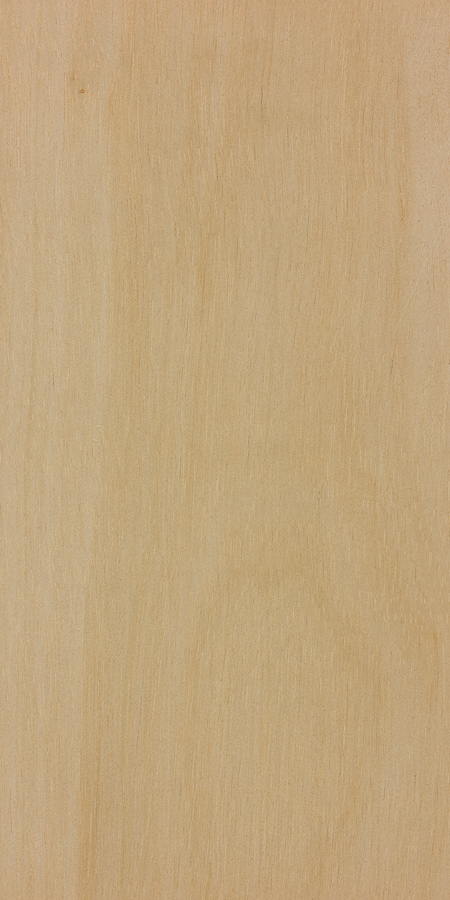
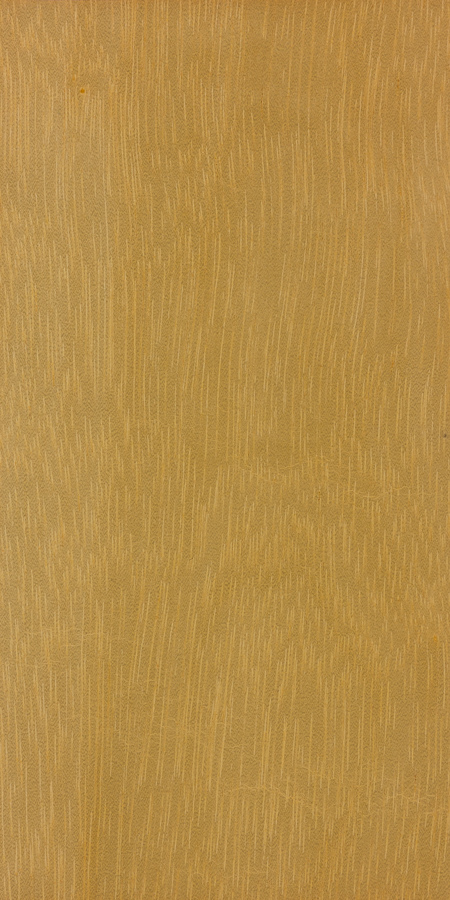
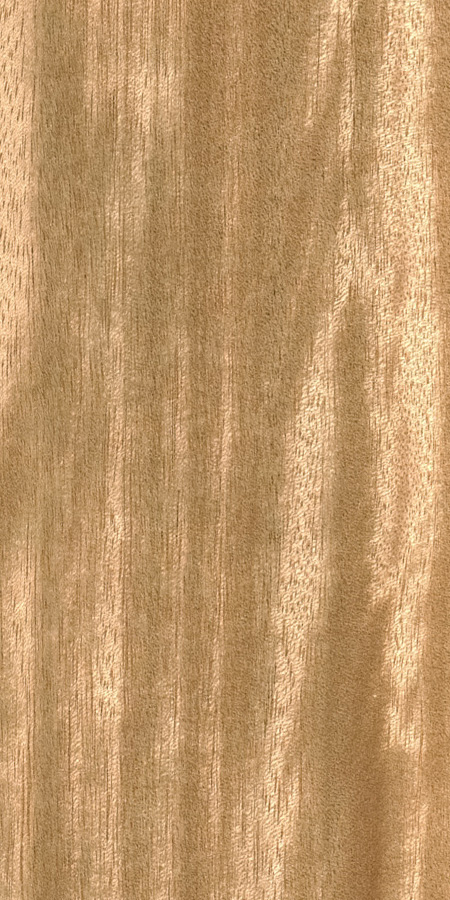
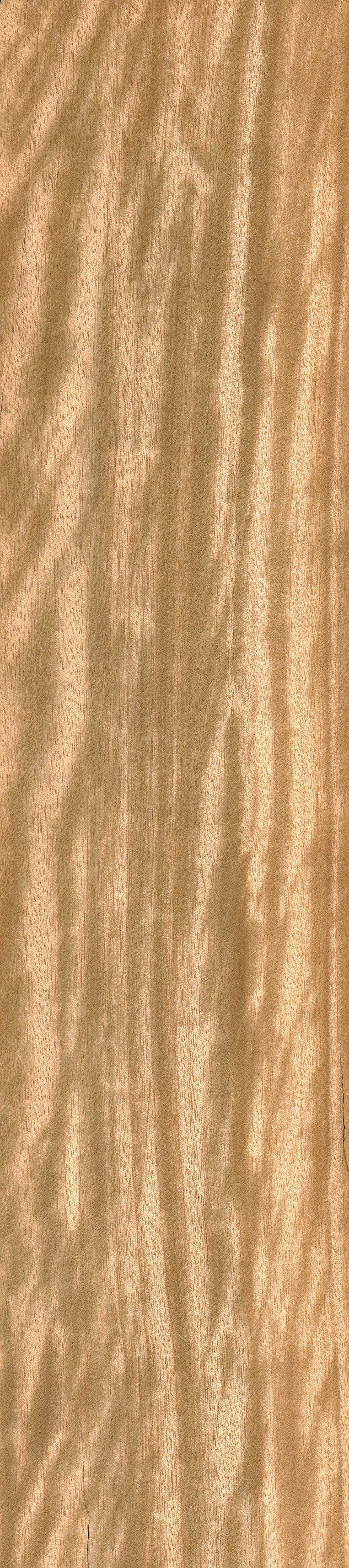
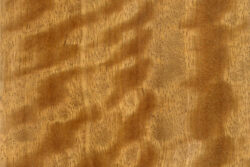
Color/Appearance: Pale yellow or cream, darkening with age to golden yellow. Heartwood and sapwood are usually indistinguishable. Avodire can exhibit a range of grain patterns, such as wavy, mottled, and rippled, with an almost-shimmering chatoyance, making it a popular choice for veneering applications.
Grain/Texture:Grain can be straight, wavy, or irregular and interlocked. Texture is fine, with a high natural luster.
Rot Resistance:Avodire is non-durable in regards to decay resistance, and is susceptible to insect attack.
Workability: Avodire is generally regarded as having good working characteristics, and is easy to work with hand or machine tools, though wood with interlocked grain can pose a challenge with tearout while being planed. The wood also has a slight blunting effect on tool cutters. Glues and finishes well.
Allergies/Toxicity: Although severe reactions are quite uncommon, avodire has been reported to cause skin irritation, nosebleeds, internal bleeding, and asthma-like symptoms. See the articles Wood Allergies and Toxicity and Wood Dust Safety for more information.
Pricing/Availability: Avodire is commonly sold as a veneer for a moderate price, though boards are also available. Avodire lumber is likely to be in the medium price range for an imported hardwood, though veneer or solid lumber with highly figured grain is likely to be much more expensive.
Sustainability: This wood species is not listed in the CITES Appendices, but is on the IUCN Red List. It is listed as vulnerable due to a population reduction of over 30% in the past three generations, caused by a decline in its natural range, and exploitation.
Common Uses: Veneer, cabinetry, furniture, millwork, and plywood.
Comments: Similar in working properties to the true mahoganies (Swietenia genus), avodire is indeed botanically related as both are in the Meliaceae family, and it’s sometimes sold under the name white mahogany (though this name is also applied to Roseodendron donnell-smithii, as well as Eucalyptus acmenioides). Not surprisingly, the wood is dimensionally stable and, like true mahogany, has good working characteristics. Avodire also has a very good MOR-to-weight ratio, though it used more often for decorative rather than structural purposes.
In addition to the wood being marketed under the halo name mahogany, avodire has also been marketed under the commercial name African satinwood, though this vague name is more commonly used for movingui (Distemonanthus benthamianus).
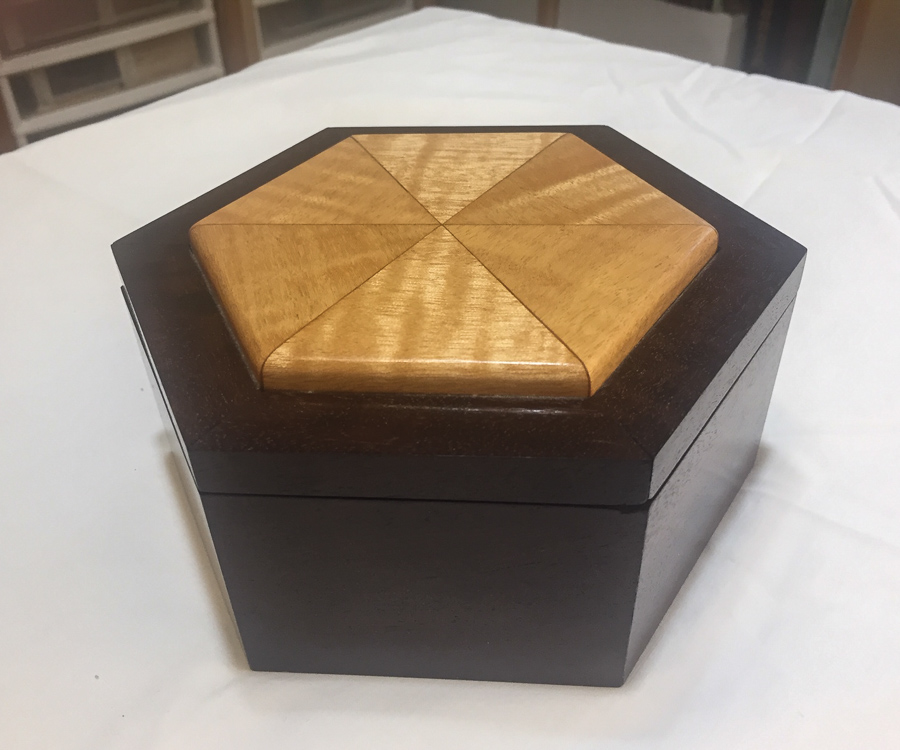
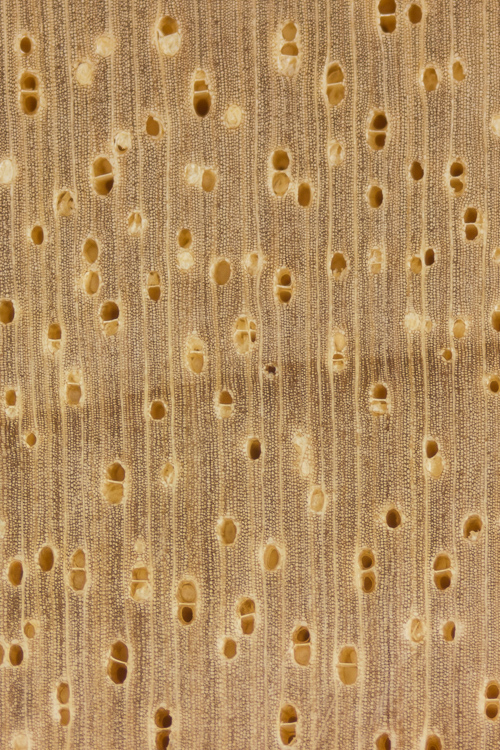
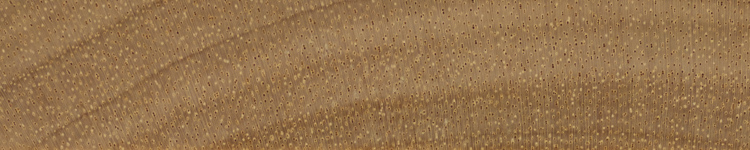
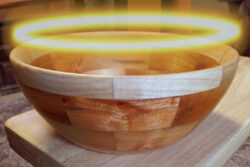
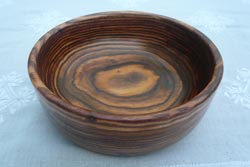
Images: Drag the slider up/down to toggle between raw and finished wood.
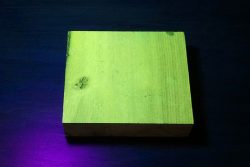
A special thanks to Justin Holden for providing a wood sample of this wood species, as well as Tim Deahl for the photo of the finished box.
Lookalikes/Substitutes: Figured pieces can be very similar to movingui, another African hardwood that’s used as a satinwood replacement. Movingui’s color tends to be more golden yellow compared to avodire’s paler straw-like hue. (If solid wood, movingui is markedly heavier and also has much more extensive aliform and confluent parenchyma.)
Idigbo is another African hardwood with similar appearance and weight. Idigbo tends to have larger pores, giving it a more porous and grainy texture on the facegrain. Additionally, idigbo can have decreased pore frequency at its growth ring margins, while avodire’s pores are much more evenly and consistently spaced.
Notes: Heartwood will sometimes fluoresce a faint yellowish green under blacklight.
There are currently two other recognized species in the Turraeanthus genus, T. longipes and T. mannii, both of which are relatively obscure and not used commercially for lumber.
Although a much tighter grain than oak, Avodire veneer can be made to resemble straight grain white oak to an extent, with a very light lime wash
.
NS-M
7 years ago
We purchased a Danish-designed 10-place Avodire dining set with 10 padded chairs in 1987 in Accra. Apart from a few scuffs on 2 chairs and line scars on the table top (not on the removable leaf), the set is in excellent condition. No insect damage has occurred during many years in humid tropical climates.
I would like to know the name of the company and craftsmen who made this amazing and beautiful piece, if anyone knows.

Although a much tighter grain than oak, Avodire veneer can be made to resemble straight grain white oak to an extent, with a very light lime wash
.
We purchased a Danish-designed 10-place Avodire dining set with 10 padded chairs in 1987 in Accra. Apart from a few scuffs on 2 chairs and line scars on the table top (not on the removable leaf), the set is in excellent condition. No insect damage has occurred during many years in humid tropical climates.
I would like to know the name of the company and craftsmen who made this amazing and beautiful piece, if anyone knows.
Would love to see a picture of your dining set. My kitchen cabinets are made of avodire veneer.
i will please appreciate updates on this wood.